Key takeaways
- Abstraction has long been used to express what can't be depicted: the inner, the sacred, the felt.
- Light and luminous color are central to spiritual painting.
- Contemplative art invites you to slow down, and can change the atmosphere of a room.
Some things can't be painted directly: hope, faith, the feeling of light returning after darkness. For more than a century, artists have turned to abstraction precisely because it lets them paint what has no outward form.
Why abstraction suits the spiritual
A realistic picture tells you what you're looking at. An abstract painting leaves room for you. That openness is why abstract art has so often been used for contemplation: it doesn't close the conversation, it invites one. Early abstract painters such as Kandinsky wrote about "the spiritual in art," and many later painters created works intended to hold the viewer in quiet, meditative attention.
The language of light
Across cultures and traditions, light is a symbol of the sacred, of hope and of understanding. In painting, light can be created through luminous color and transparent glazes that let underlying layers glow through.
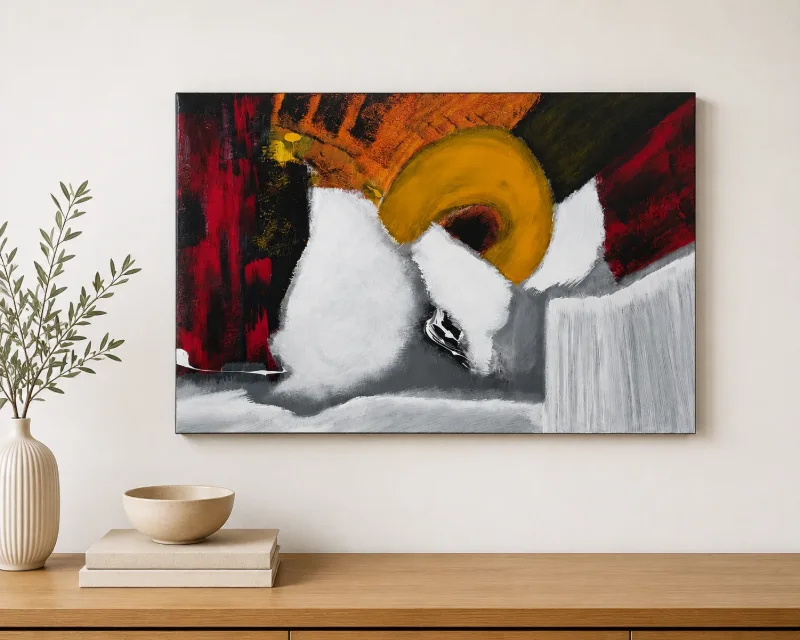
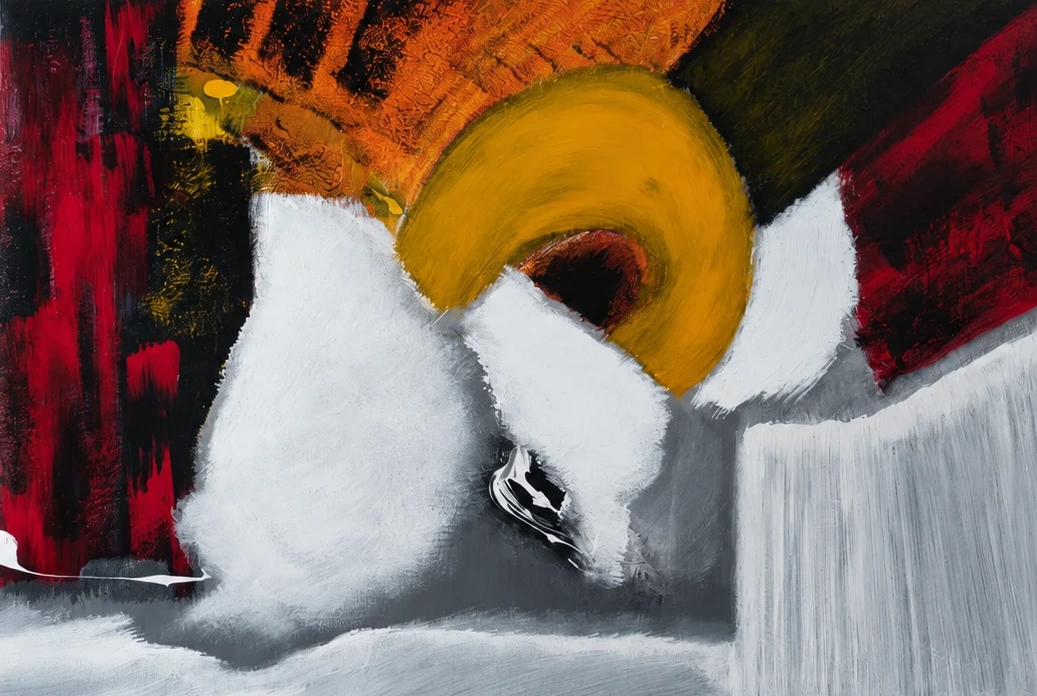
In Golden Threshold, Svitlana Morhunov builds a gold crescent from several translucent layers so it seems to shine from within, rising over soft, cloud-like forms. It's a painting about the moment just before dawn, a threshold where something new becomes possible.
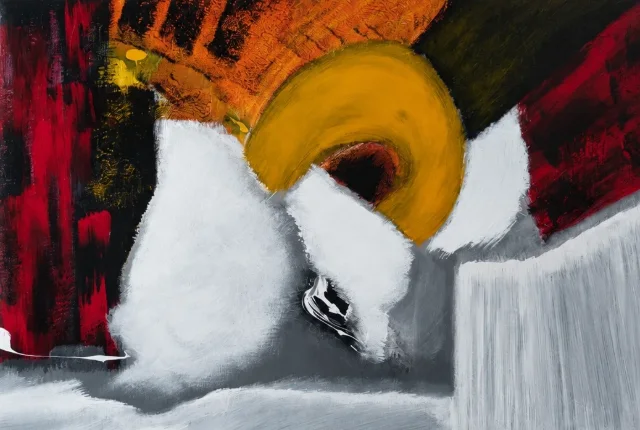 Original paintingGolden ThresholdAcrylic on canvas, 24 × 36 in · $260
View the painting →
Stillness and space
Spiritual paintings often include generous negative space (quiet, open areas that give the eye room to rest). In Amber Serenity, two black verticals stand in a softly brushed field of pale gold, like pillars or figures in prayer, while a single amber curve introduces warmth. The effect is a kind of visual silence.
Faith and home in Svitlana's work
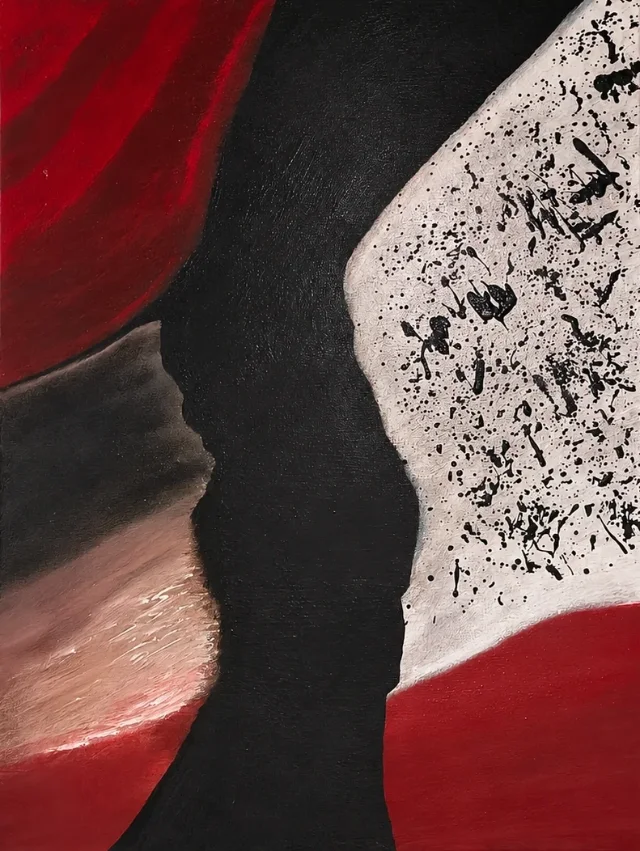
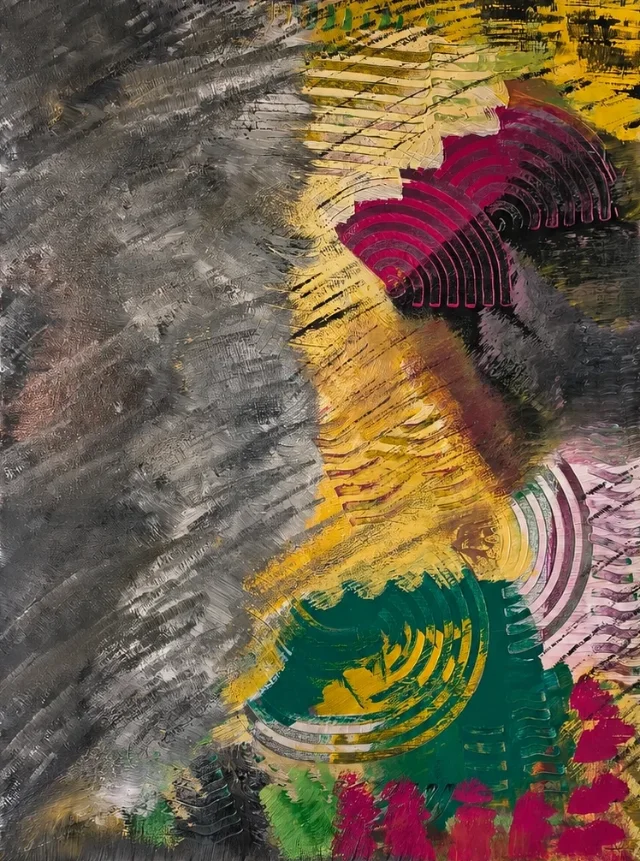
Svitlana's paintings come from a place of deep spirituality. She describes them as meditations on light, faith, home and the connections between people. River of Home reflects on belonging and the places that shape us; The Conversation, on what passes between two souls. Whether or not you share her faith, these are universal themes, and many collectors describe her paintings as bringing warmth and stillness to the rooms they live in.
Living with contemplative art
- Hang it where you naturally pause: a reading chair, a bedroom wall, the end of a hallway.
- Give it space; avoid crowding it with other objects.
- Light it gently, and let natural light change it through the day.
- Spend a moment with it each morning. A painting rewards attention.
Read more about music and painting or Svitlana Morhunov's story.
Frequently asked questions
What makes a painting spiritual?
There's no single formula. Many people find spiritual qualities in paintings that invite stillness and contemplation: luminous color, quiet space, a sense of light, and room for reflection.
Is spiritual art religious?
It can be, but it doesn't have to be. Spiritual abstract art often speaks to universal experiences such as hope, peace, awe and connection, which people of any belief can share.